
Product description
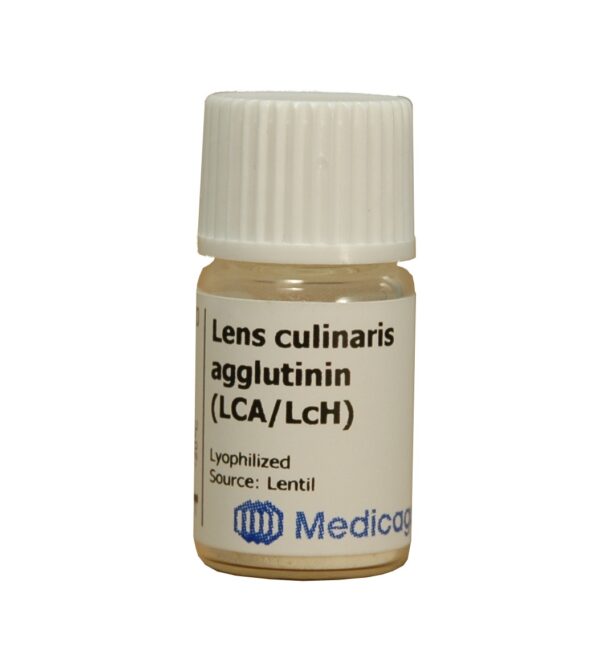
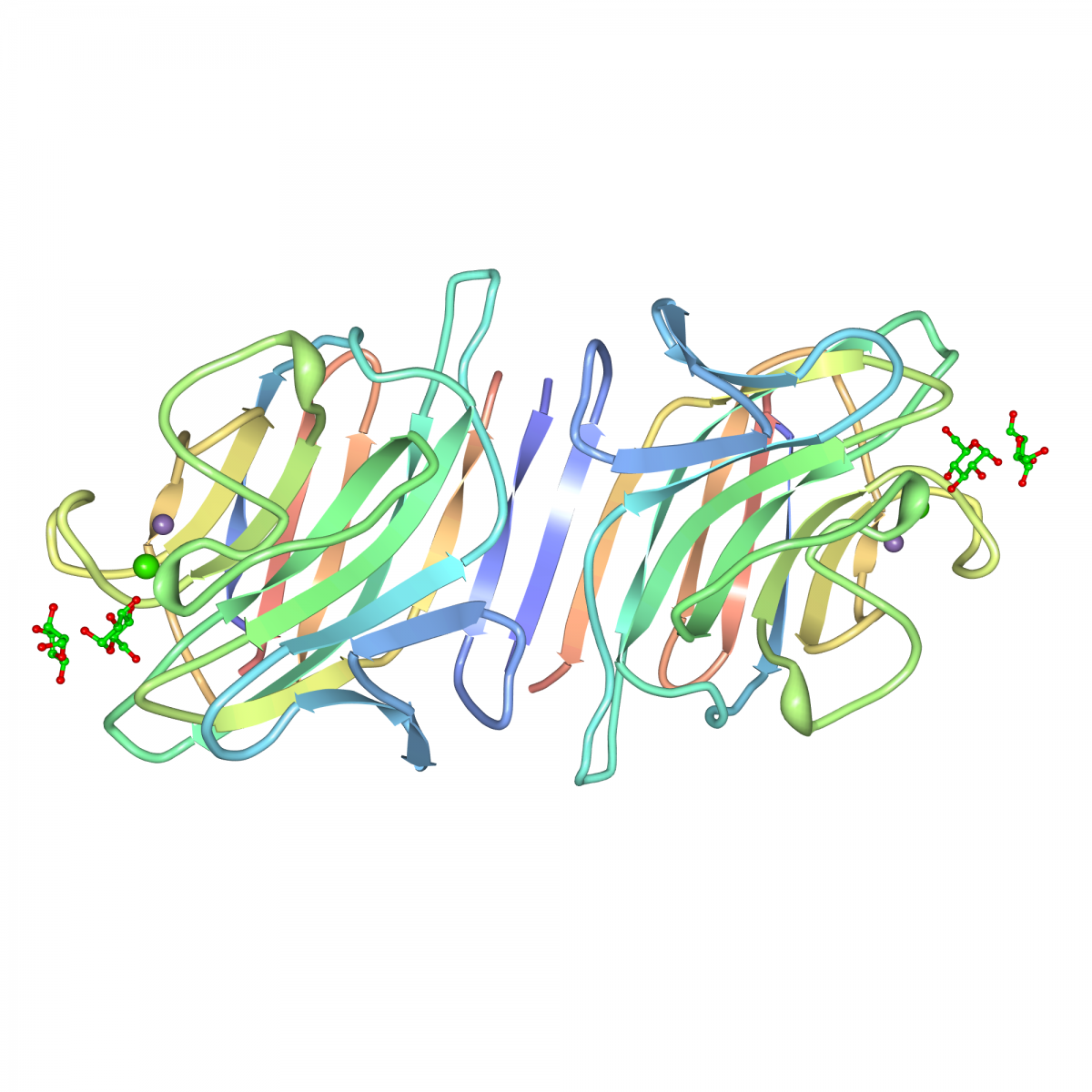
Lens culinaris lectin or agglutinin (LCA) is isolated from Lens culinaris (lentil) seeds and purified by affinity chromatography. The lectin has two subunits and a molecular weight of 46 kDa (1) and it forms a complex together with sucrose.
Lectins are, due to their specific binding to carbohydrate structures on the cell surface or elsewhere useful in haematology, immunology or as specific markers for membrane glycoprotein structures (2). LCA’s carbohydrate specificity is D-mannose and D-glucose and the two isomers LCA-A and LCA-B agglutinates human red blood cells, although this reaction is not blood group specific. LCA is also a useful component in affinity chromatography columns for the separation of glycoconjugates (3).
Medicago’s Lens culinaris lectin is supplied as a white lyophilized powder from 1 mM CaCl2, 1 mM MnCl2 and 1 mM MgCl2. No preservatives are added. In isoelectric focusing, the lectin generates two major bands at pI 8.15, 8.45 and one minor band at pI 8.65 (Figure 3).The activity of the lectin is determined by haemagglutination with human blood. Lens culinaris lectin agglutinates a 2% suspension of human erythrocytes at a lectin concentration of ≤8 μg/ml in 0.9% saline solution (NaCl) after 2 h at 25°C.
Adding 60 mM methyl mannoside yields an inhibition with a lectin titer that is at least 16-fold weaker than the control (Figure 4). Addition of Mn2+ and Ca2+ to the reconstitution buffer will enhance hemagglutination activity (1).
The lectin is avaliable in vials containing 100 mg, 25 mg or 10 mg lyophilized powder and the product is to be used for laboratory work only.
Applications
- Haemagglutination studies
- Cell agglutination studies
- Component in affinity columns
- Separation of glycoconjugates
Directions for use
Medicago’s Lens culinaris lyophilized lectin may be reconstituted with 2 ml of deionized water before use, spin the vial gently until full dissolution. Aggregation is thought to occur in the presence of high concentrations of 2-mercaptoethanol.
Shipping and storage
The product is shipped at -20°C however for over-the-day transport it may be shipped at ambient temperature. The lyophilized powder is stable for more than three years from production date when stored below -20°C. After reconstitution with deionized water, the solution may be stored frozen in working aliquots for up to 12 months.
References
(1) Liener I. E., Sharon N., Goldstein I. J., (1986) The Lectins – Properties, Functions and Applications in Biology and Medicine.
(2) The Structure of the Lentil (Lens culinaris) Lectin Amino acid sequence determination and prediction of the secondary structure. Andre Foriers, Evelyne Lebrun, Roland Van Rapenbusch, Roeland de Neve, and A. Donny Strosberg. J. Biol. Chem. 256, No 11: 5550-5560.
(3) NMR, molecular modeling, and crystallographic studies of lentil lectin- sucrose interaction. Casset, F., Hamelryck, T., Loris, R
